Best time to fly to Melbourne
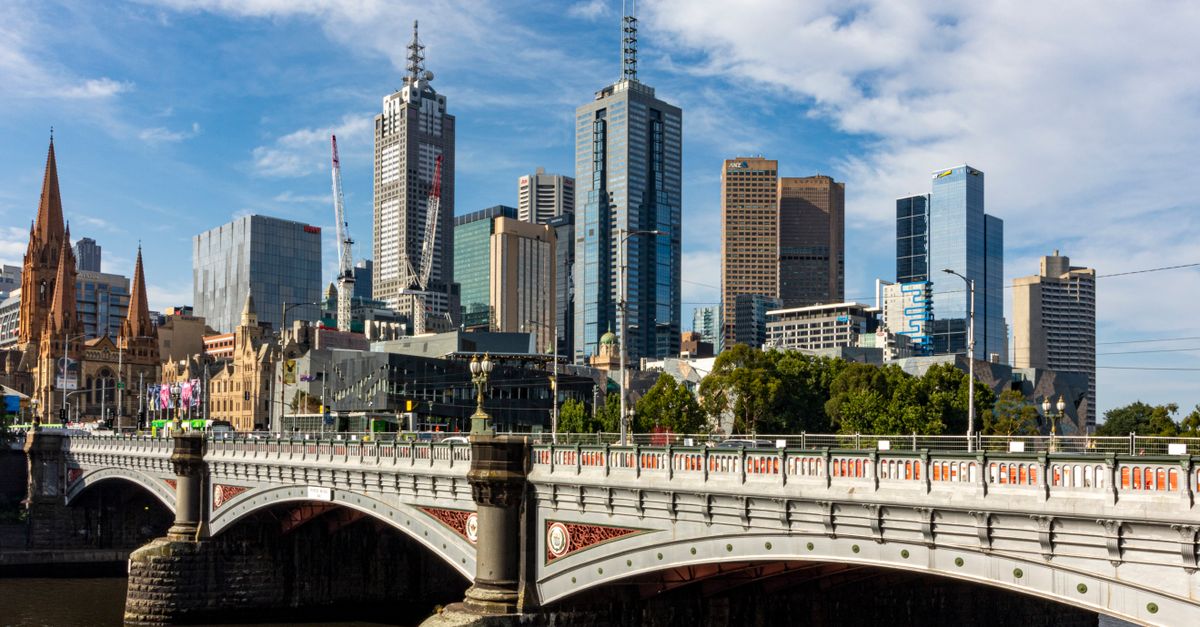
Melbourne runs on flipped (Southern Hemisphere) seasons: our winter is their warm, expensive peak; our summer is their cheap off-season.
Live cheapest flight to Melbourne I’m tracking right now: US$1,212 from New York (Nov 2026).
The short answer
Melbourne runs on flipped, Southern-Hemisphere seasons, so it’s warmest and busiest over our winter — December to February — which is the priciest time to fly and clashes with the Australian Open. From Canada and the US the best value is the local autumn (March–May) for mild, settled weather at lower fares, or Australian winter (June–August) for the cheapest seats if you don’t mind cool, grey days. Avoid mid-December to late January.
Melbourne season by season
Remember the hemisphere flip. Summer (December–February) is warm to hot — mostly low-to-high 20s°C with the odd 35°C+ heat spike — long evenings, and peak everything: it overlaps Christmas, Australian summer school holidays, and the Australian Open, so fares and hotels sit at their highest.
Autumn (March–May) is the sweet spot and arguably Melbourne’s nicest weather: mild, settled, golden. Crowds thin and fares ease off the summer peak.
Winter (June–August) is cool and grey — roughly 6–14°C with plenty of overcast days — but it’s the cheapest time to fly, with the fewest visitors. Melbourne rarely gets truly cold, so an off-season city trip works well if price leads.
Spring (September–November) warms up unpredictably and prices climb toward summer, ending with the Melbourne Cup carnival in early November. And a local truism worth packing for: Melbourne is famous for “four seasons in one day,” so bring layers whenever you go.
Dates that move the price
The big fare driver is the Christmas–New-Year–summer-holiday stretch (mid-December to late January), when North American winter-escape demand meets Australia’s peak season — the highest fares of the year, booked earliest. The Australian Open (mid-to-late January) piles onto that, spiking Melbourne accommodation in particular. Later in the year, the Melbourne Cup (first Tuesday of November, a Victorian public holiday) and the Australian Grand Prix (around March) crowd the city and lift hotel prices — though those move accommodation more than airfares.
When to book
Melbourne is ultra-long-haul from North America — non-stop options from the US West Coast, and one-stop routings via the US, Asia, or another Australian city from elsewhere — so it rewards booking early: three to six months out is realistic, and more for the December–January peak. Two practical notes: you cross the International Date Line, so you’ll “lose” a calendar day flying there (and gain it coming home); and Canadian and US visitors need an Australian ETA (a quick online visa) before departure — sort it well ahead.
Bottom line
For the best mix of weather and price, fly to Melbourne in autumn — March to May. For the cheapest fare outright, Australian winter (June–August) wins if you’ll trade grey skies for savings. Avoid mid-December through late January — Christmas, summer holidays, and the Australian Open all at once — unless those dates are fixed, and if they are, book months ahead and watch the departure city, since the cheapest gateway shifts, which is what the live routes below track.
Cheapest months (from my price checks)
Based on departure months I’ve sampled on the cheapest origin into Melbourne right now. Patterns firm up as more history banks.
| Departure month | Cheapest seen |
|---|---|
| November | US$1,140 |
| February | US$1,141 |
| January | US$1,158 |
| October | US$1,219 |
| March | US$1,243 |
| August | US$1,264 |
Practical tips
- Cheapest fares are Australian winter (June–August); autumn (March–May) balances weather and price.
- Peak and priciest: mid-December to late January (Christmas, summer holidays, Australian Open) — book early.
- Ultra-long-haul: cross the Date Line, pack for “four seasons in one day,” and get an Australian ETA before you fly.
Current flights to Melbourne
- New York to Melbourne flights — US$1,212
- Washington DC to Melbourne flights — US$1,366
- Montreal to Melbourne flights — $1,616
- Ottawa to Melbourne flights — $1,692
- Edmonton to Melbourne flights — $1,754
- Winnipeg to Melbourne flights — $2,022
- Regina to Melbourne flights — $2,392
- Kelowna to Melbourne flights — $2,848
- Halifax to Melbourne flights — $2,926